
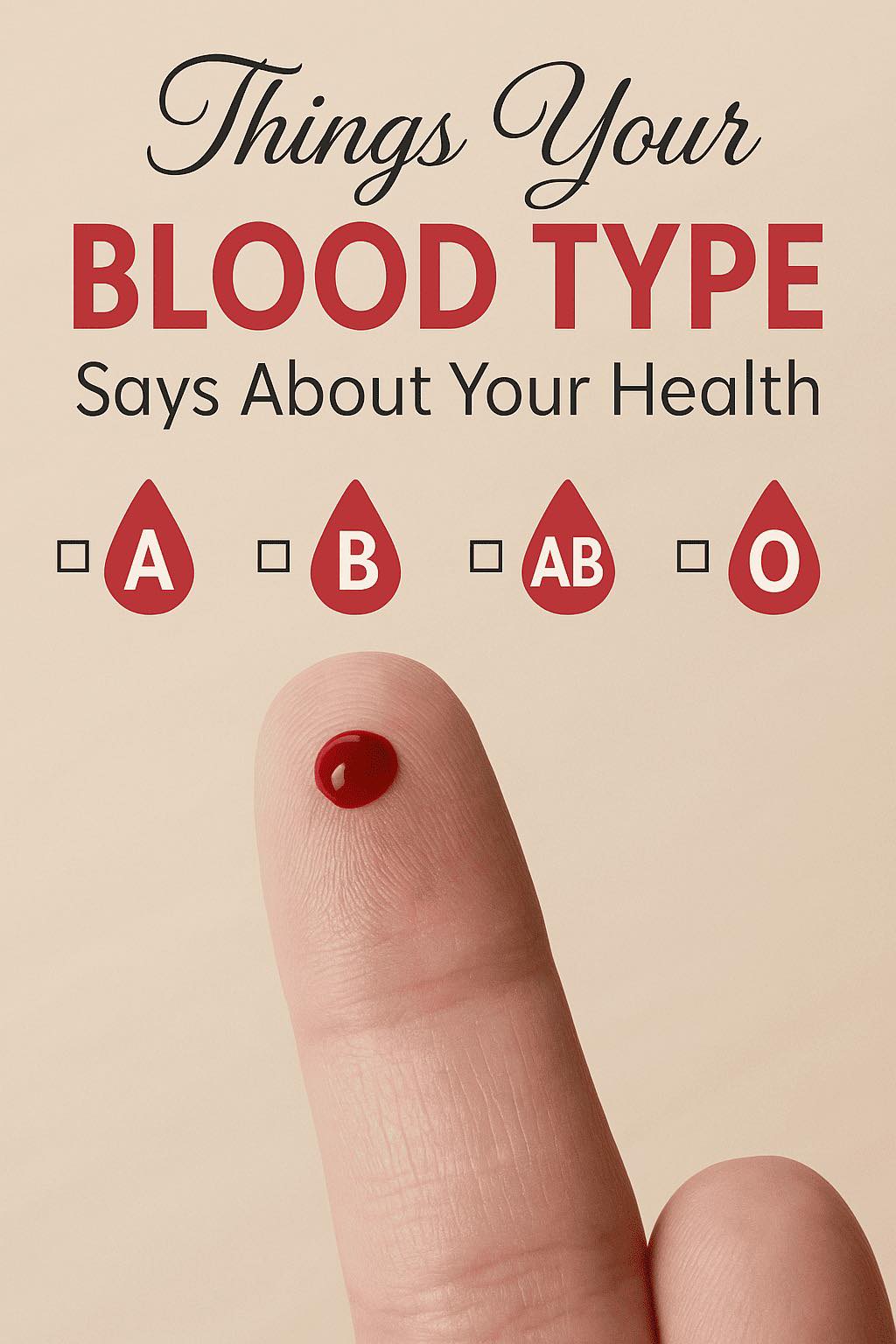
Your blood type is more than just a label used for transfusions — it’s a biological signature that can influence various aspects of your health. Blood types (A, B, AB, and O) are determined by specific molecules called antigens on the surface of red blood cells. These antigens interact with your immune system, and research suggests that they may play a role in disease susceptibility, cardiovascular health, and even your body’s response to infections.
While your blood type doesn’t determine your destiny, it can offer insight into how your body might react to certain conditions or medical risks.
Understanding Blood Types and the ABO System
The ABO blood group system was first discovered by Karl Landsteiner in 1901. It classifies blood based on the presence or absence of A and B antigens on red blood cells:
-
Type A: Has A antigens and anti-B antibodies.
-
Type B: Has B antigens and anti-A antibodies.
-
Type O: Has no A or B antigens, but both anti-A and anti-B antibodies — the “universal donor.”
Type AB: Has both A and B antigens, and no antibodies — the “universal recipient.
Recent Articles
10 Early Warning Signs of a Stroke Everyone Should Know to Take Prompt Action

BE CAREFUL, if you get these bruises on your body, it means you have Ca…see more

Garlic and Honey in the Morning: A Simple Habit Many Seniors Are Rediscovering

Rosemary for Pain Relief: A Natural Remedy Backed by Tradition
-
