Short link: https://short.pageviewpro.com/hzg17o
2. Understanding Thermal Tracking: The Hidden Physics Behind the Marks
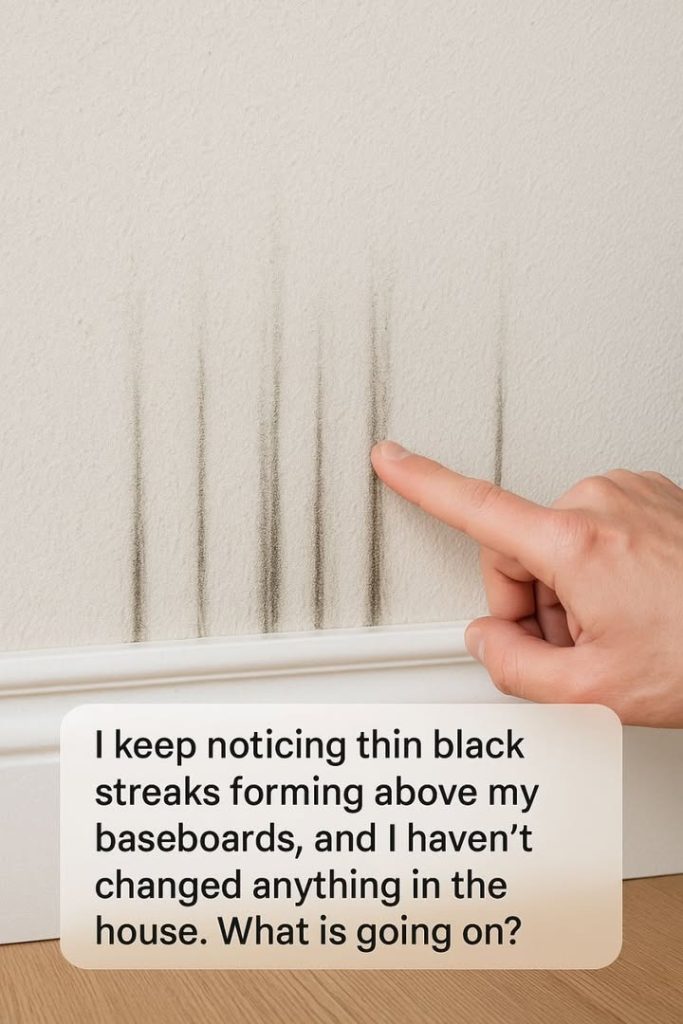
Thermal tracking is a phenomenon driven by temperature differentials within your home. When warm air rises and meets cooler surfaces, it can lead to condensation, which in turn attracts and holds particulate matter. This is why the streaks are often found above baseboards or along studs and joists.
In homes with poor insulation or significant thermal bridging, the temperature difference between the interior and exterior walls can be substantial, sometimes exceeding 10 degrees Fahrenheit. This differential creates a perfect environment for thermal tracking to occur, making it more likely that you’ll see these streaks on your walls.
3. How Warm Walls and Cold Air Create Perfect “Dirt Magnets”
The interaction between warm walls and cold air is a key component in the formation of these streaks. As warm air moves through the house, it carries with it dust and other airborne particles. When this warm air encounters cooler surfaces, such as those near baseboards, it cools and deposits these particles.
This process is exacerbated in homes where the HVAC system is not evenly distributing heat, or where there are leaks in the building envelope. The constant cycle of air movement and temperature fluctuation causes more particles to settle, reinforcing the streaks over time.
CONTINUED ON THE NEXT PAGE.